28 November 2026
What to check before booking a quad bike desert safari in Dubai
Presented by @quadbikedesertsafaridubaisite
Booking a quad bike desert safari dubai experience sounds simple until the small details start to matter. Desert riding is not the same as driving on a quiet road. Terrain, heat, timing, clothing, and the way the ride is run all shape the day. A little checking before you pay can make the difference between a smooth outing and a disappointing one.
Start with the basics that affect your safety and comfort. The operator should be clear about the route, the riding level required, and what happens if conditions change. If a listing uses vague language and avoids practical details, treat that as a signal to ask more questions before committing.
Confirm what kind of ride is included
Not every quad bike outing follows the same format. Some are short riding sessions, some include a broader desert route, and others sit alongside activities such as dune bashing or a camp visit. Read the description closely so you know whether the bike ride is the main event or one part of a larger package.
Check the duration in plain terms. A time range can mean different things depending on whether it covers driving from the meeting point, safety briefings, stops, or only time on the bike. Ask what the rider actually gets. If the schedule includes several activities, find out how much time is spent on each one.
The route matters too. A guided trail may suit newer riders because it keeps the group on a managed path. A more open ride may feel freer, but it can demand better control and steadier judgment. Match the ride to your experience rather than choosing only by the most dramatic wording in the description.
Check rider requirements before you reserve
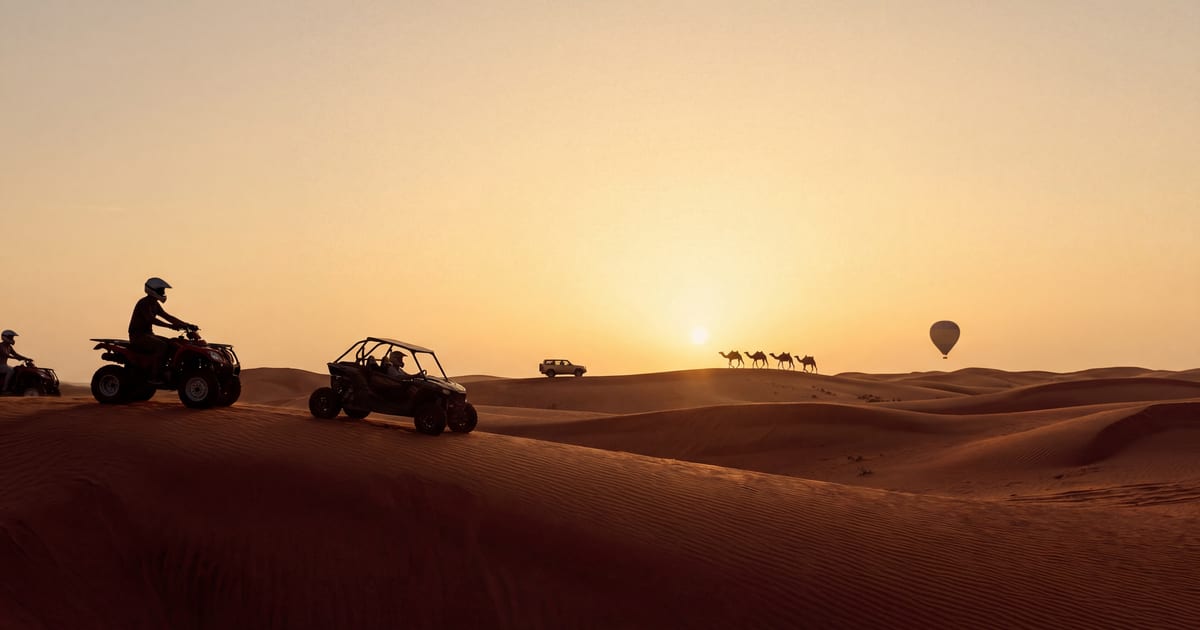
Age, height, licence, and experience rules can vary. Do not assume that everyone in a group can ride the same vehicle. If children or less confident riders are coming, confirm what options exist and whether there is a passenger arrangement that fits the plan.
Be honest about riding experience. A person who has ridden a quad bike once on firm ground may not feel ready for soft sand, uneven slopes, and turns around dune edges. The right operator will ask useful questions and set expectations clearly. If the answer sounds rushed, pause and compare other options.
Weight and clothing can also affect comfort. Long trousers, closed shoes, eye protection, and sun cover are sensible choices for desert riding. Loose scarves, flowing dresses, and open sandals can catch on the bike or leave skin exposed to sand and sun. Ask what is recommended rather than guessing.
Look closely at safety equipment and briefings
A safety helmet should be part of the setup, and it should fit properly. A helmet that shifts around, sits too low over the eyes, or leaves the chin exposed is not much use. If the size range is limited, ask whether a better fit can be arranged before the ride begins.
The briefing should explain hand signals, group spacing, stopping, and what riders should do if they feel unsure. Pay attention to how controls are described. A good explanation of ATV throttle control should make sense to a beginner, not sound like a rushed technical note. Riders should understand how to slow down, how to keep steady pressure on the controls, and what to do if the group stops unexpectedly.
It is also worth asking how the ride is supervised. A guide at the front and another at the back can help keep the group together. That matters more when the route includes changing sand dune gradient or blind turns. Clear supervision reduces confusion, especially when several riders have mixed experience levels.
Ask about the bike and its condition
You do not need to be a mechanic, but you should know that the vehicle is checked between rides. Ask whether the bike is inspected for tyre condition, brakes, lights where relevant, and controls. A well maintained quad should feel stable, respond evenly, and not pull strangely under normal riding.
One practical point is the quad bike engine kill switch. Riders should be shown where it is and what it does during the briefing. That does not mean experimenting with controls or trying to repair anything. It means knowing what to tell the guide if a control feels stiff, unusual, or unresponsive.
If something seems wrong once the ride starts, stop and say so. Do not try to fix mechanical issues in the desert or continue riding while unsure about the bike. A qualified professional should handle repairs. The rider's job is to ask early, listen to the guide, and avoid pushing through a problem.
Think about timing and desert conditions
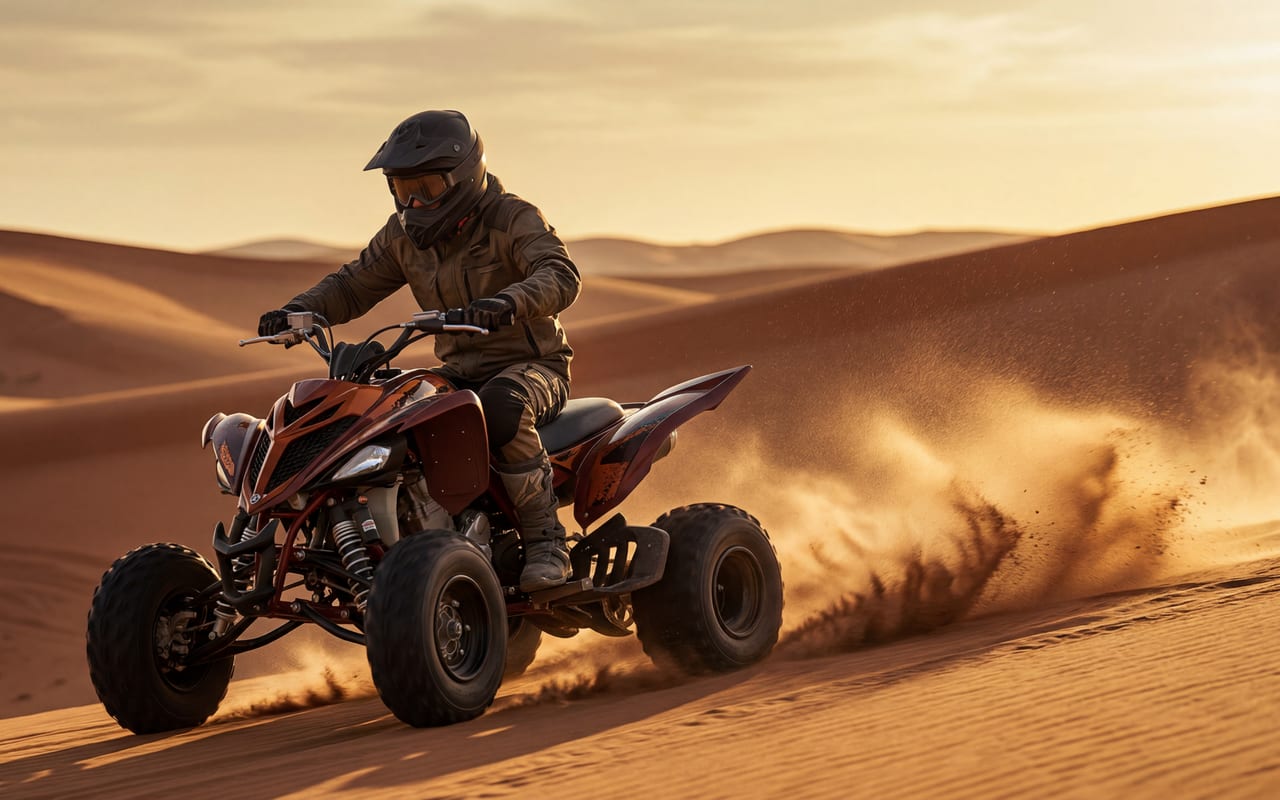
Dubai's desert changes through the day. Midday heat can be harsh, while late afternoon brings a different set of considerations, including shorter light after sunset. Sunset timing can affect the route and the pace, especially if the outing continues after dark. Ask how the schedule handles fading light and whether the return leg is planned before conditions become difficult.
Sand temperature is another detail that is easy to overlook. Surface sand can feel much hotter than the air, and it can kick up around boots and legs. Closed footwear and suitable trousers help. Eye protection also matters when wind lifts fine dust across the route.
Weather can alter plans. Strong wind, heavy rain, or unstable conditions may change how a route is managed. Ask what happens if the ride is adjusted, delayed, or cut short. Clear answers at the booking stage are easier to deal with than surprises at the meeting point.
Read the price and inclusions carefully
Price is worth checking, but it should not be the only measure. Look at what is included before comparing offers. Transport, briefing, equipment, refreshments, photography, and extra activities may be bundled in some cases and separate in others. The same headline figure can represent quite different days.
When comparing a few options, keep notes in the same format for each one. That makes it easier to spot gaps. For example, one listing may look cheaper until you add transport or required extras. Another may appear more complete but leave little time on the bike. Many readers start with sites such as atvdubaidesert.com, then check the finer points before choosing the option that fits their plans.
Ask about the payment terms and the rules for changes. A clear cancellation policy is useful because travel plans shift. Find out what counts as a late change and whether deposits are refundable under stated conditions. Keep written confirmation of the main points, including the date, meeting details, duration, and inclusions.
Check meeting details and group size
Desert meeting points can be easy to confuse, especially when several operators use nearby areas. Confirm the exact pickup or meeting arrangement and how riders are identified on arrival. Save the details before the day, and allow time for traffic and location changes.
Group size affects the feel of the ride. A smaller group may offer more space and clearer communication. A larger group can still work well if the route and supervision are organised. Ask how riders are split by ability and whether beginners are mixed with experienced riders.
If you are booking for a family or a group of friends, decide what each person wants from the day. Some may want a lively ride, while others prefer a gentler pace and plenty of stops. Share that information before booking. A good match is more useful than a vague promise of something for everyone.
Look at insurance, rules, and personal responsibility
Ask what cover applies to the activity and what the rider is responsible for. Read the terms rather than relying on a short summary. Rules about damage, risky riding, age limits, and following the guide are usually there for a reason. If anything is unclear, ask for a plain explanation before paying.
Personal responsibility still matters even when the ride is organised. Keep a safe distance, avoid sudden turns near other bikes, listen to the guide, and stop if you feel tired or unsettled. Soft sand can slow a bike sharply and make steering feel different from paved ground. Smooth inputs and patience are more useful than speed.
Electronic devices and loose items need attention too. Phones, cameras, and keys can fall into sand or get damaged by vibration. Use a secure pocket or pouch. If you want photos, ask where and when it is safe to take them instead of stopping without warning.
Questions worth asking before you book
- What is included in the ride time, and how much of it is actual riding?
- What helmet sizes, clothing advice, and safety briefing are provided?
- How is the route supervised, and how are riders grouped by ability?
- What happens if weather or desert conditions change the plan?
- What are the payment, change, and cancellation terms?
A booking decision becomes easier when the answers are specific. Clear information about the route, equipment, supervision, timing, and terms tells you far more than polished photos alone. Compare the details side by side, choose the ride that suits the least experienced person in your group, and keep the confirmation handy. A quad bike desert safari dubai outing is best approached with practical questions first and expectations set honestly.